


Legal Current Affairs

Home Legal Current Affairs

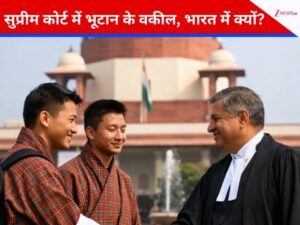
भारत के सुप्रीम कोर्ट ने युवा कानूनी पेशेवरों के आदान-प्रदान के लिए भूटान के सुप्रीम कोर्ट के साथ किया समझौता

Supreme Court of India signed an agreement with the Supreme Court of Bhutan for the exchange of young legal professionals

भारत–भूटान न्यायिक सहयोग
घोषणा करने वाले / Announcing Authority

  • यह जानकारी न्यायमूर्ति सूर्यकांत द्वारा साझा की गई।

समझौता (MoU) किसके बीच / Parties to the MoU

  • यह MoU सुप्रीम कोर्ट ऑफ इंडिया और सुप्रीम कोर्ट ऑफ भूटान के बीच हुआ है।
  • युवा क़ानूनी पेशेवरों के आदान-प्रदान के माध्यम से न्यायिक सहयोग को बढ़ावा देना।
  • To promote judicial cooperation through the exchange of young legal professionals.

लॉ क्लर्क्स का आदान-प्रदान / Exchange of Law Clerks

    • भूटान के 2 लॉ क्लर्क्स
    • भारत के सुप्रीम कोर्ट में 3 महीने के लिए कार्य करेंगे
    • Two law clerks from Bhutan
    • Will work in the Supreme Court of India for a three-month period

Supreme Court Decision General vs SC/ST/OBC Seats

अगर आपके अधिकार आपको न मिलें तो?

If Your Legal Rights Are Denied

 आप ज़रा सोचिए कि जो अधिकार आपको कानून और संविधान के माध्यम से मिलने चाहिए थे,
अगर वही अधिकार आपको न मिलें, तो आपको कैसा महसूस होगा?

Just imagine, if the rights that should have been granted to you
through law and the Constitution are denied, how would you feel?

A case related to Rajasthan Clerk Recruitment Examination

Post in General Category also open quota candidates: SUPREME COURT
NEW DELHI: Supreme Court has ruled that candidates belonging to Scheduled Castes, Scheduled Tribes, Other Backward Classes and Economically Weaker Sections are entitled to general category posts if they secure the cutoff marks stipulated for general category.The ruling by a bench of Justices Dipankar Datta and Augustine G Masih was inspired by SC’s landmark verdict in the Indra Sawhney case of 1992 which had granted 27% reservation to OBCs in govt jobs. The bench dismissed a petition by Rajasthan HC which, while recruiting candidates for certain posts, had barred reserved category candidates from getting appointed against general category posts despite securing more marks than the cutoff fixed for general category.
 

मामले की पृष्ठभूमि | Background of the Case

राजस्थान में लगभग 2500 क्लर्क पदों के लिए एक भर्ती परीक्षा आयोजित की गई थी।
इस परीक्षा का उद्देश्य योग्य उम्मीदवारों का चयन करना था।

In Rajasthan, a recruitment examination was conducted
for approximately 2500 Clerk posts to select eligible candidates.


रिज़ल्ट के बाद क्या हुआ? | What Happened After the Result?

 जब परीक्षा का परिणाम घोषित किया गया,
तो यह सामने आया कि Reserved category और Unreserved category के कट-ऑफ में असामान्य अंतर था।

After the declaration of results,
an unusual difference was noticed between the cut-off marks of
Reserved and Unreserved categories.

मुख्य समस्या

कई Reserved category उम्मीदवारों के अंक
Unreserved category में चयनित उम्मीदवारों से अधिक थे,
फिर भी उनका चयन नहीं हुआ।

Many candidates belonging to the reserved category
scored higher marks than selected candidates of the open category,
yet they were not selected.

चयन क्यों नहीं हुआ? | Why Were They Not Selected?

Reserved category के लिए सीटों की संख्या सीमित थी।
इस कारण उम्मीदवारों को केवल उनकी अपनी श्रेणी में ही रखा गया।

The number of seats in the reserved category was limited.
Therefore, candidates were considered only within their own category.

Example

मान लीजिए Reserved category में 8 सीटें उपलब्ध थीं।
इन 8 सीटों के भीतर चयन किया गया,
भले ही कुछ Reserved candidates के अंक
Open category में चयनित उम्मीदवारों से अधिक थे।

For example, if only 8 reserved seats were available,
selection was restricted to those seats
even when some reserved candidates scored higher marks.

मामला सुप्रीम कोर्ट पहुँचा

इस असमानता के कारण मामला Supreme Court तक पहुँचा।
Supreme Court ने इस पूरे मुद्दे पर विस्तार से विचार किया।

Due to this disparity, the matter reached the Supreme Court,
which examined the issue in detail.

सुप्रीम कोर्ट की मुख्य टिप्पणी

Supreme Court ने स्पष्ट किया कि
Open / General category किसी विशेष वर्ग के लिए आरक्षित नहीं है।
यह सभी योग्य उम्मीदवारों के लिए खुली होती है।

The Supreme Court clarified that
the Open or General category is not reserved for any group
and is open to all eligible candidates.

योग्यता का सही अर्थ

कोर्ट ने यह भी कहा कि
केवल अधिक अंक प्राप्त करना ही योग्यता नहीं है।
योग्यता का निर्धारण बिना किसी रियायत के किया जाता है।

The Court stated that merit is not just about scoring higher marks,
but about qualifying without availing any reservation benefits.

पूर्व निर्णय | Previous Judgments

 Indra Sawhney Case (1992)

  • जिसमें 50% आरक्षण की सीमा तय की गई थी।
  • Saurav Yadav vs State of Uttar Pradesh (2021)
    जिसमें कहा गया कि Reserved category का उम्मीदवार
    बिना रियायत के Open category में आ सकता है।

These principles were already established by earlier judgments.

सुप्रीम कोर्ट के निर्देश | Court Directions

Supreme Court ने निर्देश दिया कि:

  • एक नई चयन सूची तैयार की जाए
  • योग्य उम्मीदवारों को Typing Test का अवसर दिया जाए
  • पहले से चयनित कर्मचारियों को हटाया न जाए

The Court ordered a fresh list, opportunity for eligible candidates,
and protection of already appointed employees.

Migration का अर्थ

 Migration का अर्थ है
योग्यता के आधार पर Reserved category से
Open category में स्थानांतरण।

Migration means shifting from reserved to open category
purely on the basis of merit.

दोहरा लाभ क्यों नहीं? | Why No Double Benefit?

यदि कोई उम्मीदवार आयु छूट, प्रयास छूट या अन्य कोई आरक्षण लाभ लेता है,
तो उसे Open category में शामिल नहीं किया जा सकता।

If a candidate avails any reservation benefit,
he or she cannot be considered in the open category.

संवैधानिक आधार | Constitutional Basis

यह पूरा सिद्धांत Article 14 (Equality) और Article 16 (Equal Opportunity in Public Employment)
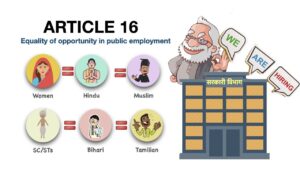
पर आधारित है।

This principle is rooted in Articles 14 and 16 of the Constitution.

निष्कर्ष | Conclusion 

  • Open category सभी के लिए खुली है
  • योग्यता बिना रियायत के तय होगी
  • दोहरा लाभ नहीं दिया जाएगा
  • Migration योग्यता पर आधारित है

भारत में आरक्षण से जुड़े प्रमुख न्यायिक निर्णय (1950–वर्तमान)

Top 10 Landmark Judgments on Reservation in India

Champakam Dorairajan Case (1951)

चंपकम दोरैराजन बनाम मद्रास राज्य (1951)

 यह भारत में आरक्षण से संबंधित पहला प्रमुख मामला था।
सुप्रीम कोर्ट ने कहा कि सामाजिक आधार पर आरक्षण, मौलिक अधिकारों का उल्लंघन करता है

इस निर्णय के बाद पहला संविधान संशोधन (Article 15(4)) लाया गया, जिससे सामाजिक और शैक्षणिक रूप से पिछड़े वर्गों के लिए आरक्षण को वैधता मिली।

Balaji Case (1963)

एम.आर. बालाजी बनाम मैसूर राज्य (1963)

 सुप्रीम कोर्ट ने कहा कि आरक्षण की सीमा अत्यधिक नहीं होनी चाहिए

कोर्ट ने यह सिद्धांत दिया कि आरक्षण सामान्यतः 50% से अधिक नहीं होना चाहिए,
हालाँकि इसे पूर्ण नियम नहीं कहा गया।

Devadasan Case (1964)

देवदासन बनाम भारत संघ (1964)

इस मामले में Carry Forward Rule को असंवैधानिक घोषित किया गया,
क्योंकि इससे आरक्षण 50% से अधिक हो रहा था।

कोर्ट ने समान अवसर के अधिकार पर ज़ोर दिया।

 State of Kerala vs N.M. Thomas (1976)

एन.एम. थॉमस बनाम केरल राज्य (1976)

 इस निर्णय में सुप्रीम कोर्ट ने कहा कि समानता का अर्थ समान व्यवहार नहीं, बल्कि समान अवसर है

यह फैसला सकारात्मक भेदभाव (Affirmative Action) को मजबूत करता है।

Indra Sawhney Case (1992)

इंदिरा साहनी बनाम भारत संघ (1992)

 यह आरक्षण से जुड़ा सबसे महत्वपूर्ण निर्णय है।

मुख्य बातें:

  • OBC आरक्षण को वैध ठहराया गया
  • 50% की सीमा को स्पष्ट रूप से स्थापित किया गया
  • Creamy Layer की अवधारणा लागू की गई
  • पदोन्नति में आरक्षण को अस्वीकार किया गया (उस समय)

Nagaraj Case (2006)

एम. नागराज बनाम भारत संघ (2006)

इस निर्णय में कहा गया कि SC/ST को पदोन्नति में आरक्षण देने से पहले सरकार को यह साबित करना होगा कि:

  • वर्ग पिछड़ा है
  • अपर्याप्त प्रतिनिधित्व है
  • प्रशासनिक दक्षता प्रभावित नहीं होगी

Jarnail Singh Case (2018)

जर्नैल सिंह बनाम लच्छमी नारायण गुप्ता (2018)

 सुप्रीम कोर्ट ने स्पष्ट किया कि SC/ST के लिए पिछड़ेपन का नया डेटा आवश्यक नहीं है।

हालाँकि Creamy Layer सिद्धांत SC/ST पर भी लागू होगा

EWS Reservation Case (2022)

ईडब्ल्यूएस आरक्षण मामला (जनहित अभ्युदय केस) – 2022

सुप्रीम कोर्ट ने
आर्थिक आधार पर 10% EWS आरक्षण को संवैधानिक रूप से वैध ठहराया।

यह आरक्षण
103वें संविधान संशोधन के तहत लागू किया गया।

Saurav Yadav Case (2021)

सौरव यादव बनाम उत्तर प्रदेश सरकार (2021)

 सुप्रीम कोर्ट ने कहा कि Open / General category सभी के लिए खुली है

यदि कोई आरक्षित वर्ग का उम्मीदवार बिना किसी रियायत के अधिक अंक लाता है, तो उसे Open category में रखा जा सकता है।


Justice Surya Kant: 53rd Chief Justice of India

Justice Surya Kant was appointed as the 53rd Chief Justice of India on 24 November 2025. He succeeded Justice Bhushan Ramkrishna (B. R.) Gavai.

Appointment of the Chief Justice of India
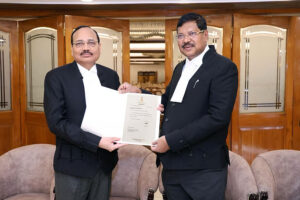
  • The appointment was notified by the Department of Justice, Ministry of Law and Justice.
  • It was made under Article 124(2) of the Constitution of India, following the approval of the President of India.
  • As per established convention, the outgoing Chief Justice of India recommends the senior-most judge of the Supreme Court as the next CJI.
    • This convention is customary in nature and not a legal or constitutional requirement.

Chief Justice of India: Constitutional Provisions

Appointment

  • The Chief Justice of India and other judges of the Supreme Court are appointed by the President of India under Article 124(2) of the Constitution.

Qualifications

To be appointed as the CJI (or a Supreme Court judge), a person must:

  • Be a citizen of India, and
  • Have:
    • Served as a High Court judge for at least 5 years, or
    • Practiced as an advocate for at least 10 years, or
    • Be a distinguished jurist, in the opinion of the President.

Tenure

  • The Chief Justice of India holds office until the age of 65 years.
  • There is no fixed tenure; it depends on the judge’s date of appointment and retirement.

Removal

  • The CJI can be removed only by the President of India, after:
    • An address by Parliament,
    • Supported by a special majority in both the Lok Sabha and the Rajya Sabha,
    • On the grounds of proved misbehavior or incapacity.

Supreme Court Verdict on the Aravalli Range: Conservation, Mining, and Balance

One of India’s oldest mountain systems, the Aravalli Range, has once again come under policy and judicial focus. In a recent order, the Supreme Court of India laid down a uniform scientific definition of the Aravalli hills and imposed a ban on new mining leases and renewals across Delhi, Haryana, Rajasthan, and Gujarat.

This judgment goes beyond mere mining regulation and represents a structural judicial intervention aimed at long-term ecological protection.

Ecological Significance of the Aravalli Range

  • Nearly 2 billion years old, the Aravalli Range is India’s oldest mountain system.
  • It acts as a natural barrier against desertification, preventing the eastward expansion of the Thar Desert.
  • Stretching about 650 km from Delhi to Gujarat, the range:
      • Contributes to climate stabilization
      • Supports rich biodiversity
      • Strengthens groundwater recharge systems
      • Serves as the source of rivers such as Chambal, Sabarmati, and Luni.

Mining Pressure

  • The Aravallis are rich in minerals such as:
    • Sandstone, limestone, marble, granite
    • Lead, zinc, copper, gold, and tungsten
  • However, four decades of excessive stone and sand mining have:
    • Degraded air quality
    • Severely impacted groundwater recharge

Regulatory and Judicial Action on Mining

  • Since the 1990s, the Ministry of Environment restricted mining to approved projects, but violations remained widespread.
  • In 2009, the Supreme Court imposed a complete ban on mining in Faridabad, Gurugram, and Mewat (Haryana).
  • In May 2024, the Court:
    • Prohibited new mining leases and renewals
    • Directed the Central Empowered Committee (CEC) to conduct a detailed investigation

Key Recommendations of the Central Empowered Committee (CEC)

The CEC proposed a science-based, multi-layered strategy focusing on both mining regulation and ecological balance:

  • Comprehensive and scientific mapping of the Aravalli Range across all states
  • Cumulative Environmental Impact Assessment (CEIA) of mining activities
  • Strict prohibition of mining in:
    • Wildlife corridors
    • Groundwater recharge zones
    • Water bodies
    • Protected habitats
  • Suspension of new mining leases and renewals until scientific mapping is completed
  • Stringent regulation of stone crusher units due to their contribution to air pollution

The Supreme Court accepted all these recommendations in its November 2025 order and directed their implementation.

Aravalli ‘Green Wall’ Project

  • Launched in June 2025 by the Central Government
  • Aims to increase green cover in a 5 km buffer zone around the Aravallis
  • Covers 29 districts across:
    • Gujarat
    • Rajasthan
    • Haryana
    • Delhi
  • Expected to help restore 26 million hectares of degraded land by 2030

Need for a Uniform Definition

The Court noted inconsistent criteria used by states and expert bodies to identify the Aravallis. Even definitions by the Forest Survey of India (FSI) varied over time.

FSI Criteria (2010)

Areas qualify as part of the Aravalli Range if:

  • Hill slope exceeds 3 degrees
  • 100 m buffer at the foothills
  • Distance between hills/valley width ≤ 500 m
  • Area is surrounded by such hills

Joint Committee and Its Findings

A joint committee was formed including representatives from:

  • Ministry of Environment
  • Forest Survey of India
  • State Forest Departments
  • Geological Survey of India
  • Central Empowered Committee

Committee Conclusion (October 2025)

  • Hills above 100 meters in height would be considered part of the Aravalli Range

Divergent Views

  • Amicus Curiae: Called the criterion too narrow, warning that hills below 100 m could be opened for mining
  • Additional Solicitor General: Argued that the 100 m criterion is more inclusive than alternative technical parameters


Additional Directions by the Supreme Court

The Court ordered the preparation of a Comprehensive Sustainable Mining Management Plan, which will:

  • Clearly demarcate no-mining zones
  • Identify areas where limited, regulated mining may be allowed
  • Scientifically map wildlife corridors and sensitive habitats
  • Assess cumulative ecological impacts
  • Determine ecological carrying capacity
  • Define environmental restoration and rehabilitation measures

The objective is to regulate mining while preserving ecological integrity.

Why No Complete Ban on Mining?

The Supreme Court clarified that:

  • Past experiences show complete bans often fuel illegal mining
  • Such bans strengthen:
    • Mining syndicates
    • Sand mafias
    • Violent and unregulated extraction

Balanced Approach Adopted

  • Existing legal mining may continue under strict regulation and monitoring
  • New projects remain suspended until the management plan is implemented
  • Permanent prohibition in ecologically sensitive areas

Conclusion: Balancing Conservation and Development

This landmark judgment treats the Aravallis not merely as a geological feature but as a national ecological asset. By mandating a uniform definition, scientific mapping, and phased regulation, the Supreme Court has attempted to strike a pragmatic balance between environmental conservation and development.

The long-term success of this framework will depend on effective and sincere implementation by both the Centre and the States.



भारत में अपराध रिपोर्ट 2023  | Crime in India Report 2023

  • भारत में 2023 में कुल दर्ज अपराध 6.24 मिलियन रहे, जो 2022 की तुलना में 7.2% वृद्धि है।
    India registered a total of 6.24 million crimes in 2023, showing a 7.2% increase compared to 2022.

    साइबर अपराधों में 31.2% की तेज वृद्धि दर्ज हुई।
    Cybercrimes recorded a steep rise of 31.2%.

  • अनुसूचित जनजातियों (STs) के खिलाफ अपराधों में 28.8% की बड़ी वृद्धि हुई। 
    Crimes against Scheduled Tribes (STs) increased significantly by 28.8%.
  • हत्या के मामलों में 2.8% की कमी आई।
    Murder cases declined by 2.8%.
  • बलात्कार के मामलों में 5.9% की गिरावट देखी गई।
    Rape cases reduced by 5.9%.
  • 2023 में कुल अपराध दर 422.2 (2022) से बढ़कर 448.3 प्रति लाख जनसंख्या हो गई।
    Overall crime rate increased from 422.2 (in 2022) to 448.3 per lakh population in 2023.
  • यह रिपोर्ट पुराने IPC की अंतिम वार्षिक रिपोर्ट है; अगली रिपोर्ट नई भारतीय दंड संहिता (BNS) पर आधारित होगी।
    This is the last NCRB report based on the old IPC; future reports will be based on the new Bharatiya Nyaya Sanhita (BNS).
  1. Why in News | चर्चा में क्यों?
    • भारत में NCRB ने ‘Crime in India 2023’ रिपोर्ट जारी की, जिसमें कुल अपराधों में 7.2% की वृद्धि दर्ज हुई।
    NCRB released the Crime in India 2023 report showing a 7.2% rise in total crimes.
  2. Overall Crime Trend | समग्र अपराध प्रवृत्ति
    हर 5 सेकंड में एक अपराध दर्ज हुआ; कुल मामले 6.24 मिलियन पहुँचे।
    • One crime registered every five seconds; total cases reached 6.24 million.
    • IPC अपराधों में 5.7% और SLL मामलों में 9.5% की वृद्धि।
    • IPC crimes rose by 5.7% and SLL offences by 9.5%.
    • यह पुरानी IPC आधारित अंतिम रिपोर्ट है; आगे BNS 2023 के आधार पर रिपोर्ट बनेगी।
    • This is the last report under old IPC; future reports will use BNS 2023.
  3. Increase in Cybercrimes | साइबर अपराधों में वृद्धि
    साइबर अपराधों में 31.2% की तेज़ बढ़ोतरी दर्ज हुई।
    • Cybercrimes rose sharply by 31.2%.
    IT Act अपराधों में 36% की वृद्धि।
    • IT Act cases rose by 36%.
    • फ्रॉड, पर्सोनेशन, फिशिंग, स्मिशिंग मुख्य कारण।
    • Cheating through impersonation, phishing and smishing were major drivers.
  4. Social Crimes (Women, Children, SC/ST) | सामाजिक अपराध (महिलाएं, बच्चे, अनुसूचित जाति/अनुसूचित जनजाति)
    • महिलाओं के खिलाफ अपराध 0.7% बढ़कर 4.48 लाख हुए।
    • Crimes against women up by 0.7% to 4.48 lakh cases.
    • SCs के खिलाफ अपराध 0.4% बढ़े।
    • Crimes against SCs rose by 0.4%.
    STs के खिलाफ अपराधों में 28.8% की बड़ी वृद्धि।
    • Crimes against STs surged by 28.8%.
    बच्चों के खिलाफ अपराध 9.2% बढ़े।
    • Crimes against children increased by 9.2%.
  5. Heinous Crimes Trend | जघन्य अपराधों का रुझान
    हत्या में 2.8% की कमी।
    • Murder cases declined by 2.8%.
    बलात्कार में 5.9% की कमी।
    • Rape cases dropped by 5.9%.
    दहेज मृत्यु में 4.6% की कमी।
    • Dowry deaths fell by 4.6%.
    राज्य के खिलाफ अपराध 13.2% घटे।
    • Offences against the State fell by 13.2%.
  6. Police & Judicial Efficiency | पुलिस और न्यायिक दक्षता
    • IPC मामलों में चार्जशीटिंग रेट 71.3% से बढ़कर 72.7% हुआ।
    • Charge-sheeting rate improved to 72.7% from 71.3%.
    • लंबित जांच 28% से बढ़कर 29.2% हुई।
    • Pending investigations rose from 28% to 29.2%.
    IPC दोषसिद्धि दर 54% पर स्थिर।
    • IPC conviction rate remained at 54%.
  7. National Crime Records Bureau (NCRB) |7. राष्ट्रीय अपराध रिकॉर्ड ब्यूरो (एनसीआरबी)
    1986 में टंडन समिति, राष्ट्रीय पुलिस आयोग और MHA टास्क फोर्स की सिफारिशों पर स्थापित।
    • Established in 1986 based on recommendations of Tandon Committee, NPC, and MHA Task Force.
    गृह मंत्रालय के अधीन केंद्रीय अपराध डाटा भंडार।
    • Functions under MHA as a central repository of crime data.
    • CCTNS, AD&S, Prison Statistics जैसी रिपोर्टें प्रकाशित करता है।
    • Publishes Crime in India, ADSI, and Prison Statistics reports.
  8. Why Cybercrime is Rising in India? | भारत में साइबर अपराध क्यों बढ़ रहा है?
    • 800 मिलियन से अधिक इंटरनेट उपयोगकर्ता, लेकिन डिजिटल साक्षरता कम।
    • Huge user base with low digital literacy.
    • साइबर अपराधी पेशेवर हो रहे हैं—हैकिंग टूल, फिशिंग किट, बोटनेट किराए पर उपलब्ध।
    • Criminals now use rented hacking tools, phishing kits and botnets.
    • कई अपराध विदेशी देशों (खासतौर पर दक्षिण-पूर्व एशिया) से संचालित।
    • Many cybercrimes originate abroad, especially SE Asia.
    • डाटा लीक और निजी जानकारी के अवैध व्यापार से टार्गेटेड फ्रॉड बढ़ा।
    • Data breaches and illegal data trade enable targeted attacks.