


भारत–भूटान न्यायिक सहयोग
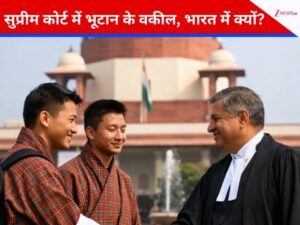
घोषणा करने वाले / Announcing Authority
समझौता (MoU) किसके बीच / Parties to the MoU
लॉ क्लर्क्स का आदान-प्रदान / Exchange of Law Clerks
अगर आपके अधिकार आपको न मिलें तो?
If Your Legal Rights Are Denied

आप ज़रा सोचिए कि जो अधिकार आपको कानून और संविधान के माध्यम से मिलने चाहिए थे,
अगर वही अधिकार आपको न मिलें, तो आपको कैसा महसूस होगा?
Just imagine, if the rights that should have been granted to you
through law and the Constitution are denied, how would you feel?
A case related to Rajasthan Clerk Recruitment Examination
Post in General Category also open quota candidates: SUPREME COURT
NEW DELHI: Supreme Court has ruled that candidates belonging to Scheduled Castes, Scheduled Tribes, Other Backward Classes and Economically Weaker Sections are entitled to general category posts if they secure the cutoff marks stipulated for general category.The ruling by a bench of Justices Dipankar Datta and Augustine G Masih was inspired by SC’s landmark verdict in the Indra Sawhney case of 1992 which had granted 27% reservation to OBCs in govt jobs. The bench dismissed a petition by Rajasthan HC which, while recruiting candidates for certain posts, had barred reserved category candidates from getting appointed against general category posts despite securing more marks than the cutoff fixed for general category.
मामले की पृष्ठभूमि | Background of the Case
राजस्थान में लगभग 2500 क्लर्क पदों के लिए एक भर्ती परीक्षा आयोजित की गई थी।
इस परीक्षा का उद्देश्य योग्य उम्मीदवारों का चयन करना था।
In Rajasthan, a recruitment examination was conducted
for approximately 2500 Clerk posts to select eligible candidates.
रिज़ल्ट के बाद क्या हुआ? | What Happened After the Result?
जब परीक्षा का परिणाम घोषित किया गया,
तो यह सामने आया कि Reserved category और Unreserved category के कट-ऑफ में असामान्य अंतर था।
After the declaration of results,
an unusual difference was noticed between the cut-off marks of
Reserved and Unreserved categories.
मुख्य समस्या
कई Reserved category उम्मीदवारों के अंक
Unreserved category में चयनित उम्मीदवारों से अधिक थे,
फिर भी उनका चयन नहीं हुआ।
Many candidates belonging to the reserved category
scored higher marks than selected candidates of the open category,
yet they were not selected.
चयन क्यों नहीं हुआ? | Why Were They Not Selected?
Reserved category के लिए सीटों की संख्या सीमित थी।
इस कारण उम्मीदवारों को केवल उनकी अपनी श्रेणी में ही रखा गया।
The number of seats in the reserved category was limited.
Therefore, candidates were considered only within their own category.
Example
मान लीजिए Reserved category में 8 सीटें उपलब्ध थीं।
इन 8 सीटों के भीतर चयन किया गया,
भले ही कुछ Reserved candidates के अंक
Open category में चयनित उम्मीदवारों से अधिक थे।
For example, if only 8 reserved seats were available,
selection was restricted to those seats
even when some reserved candidates scored higher marks.
मामला सुप्रीम कोर्ट पहुँचा
इस असमानता के कारण मामला Supreme Court तक पहुँचा।
Supreme Court ने इस पूरे मुद्दे पर विस्तार से विचार किया।
Due to this disparity, the matter reached the Supreme Court,
which examined the issue in detail.
सुप्रीम कोर्ट की मुख्य टिप्पणी
Supreme Court ने स्पष्ट किया कि
Open / General category किसी विशेष वर्ग के लिए आरक्षित नहीं है।
यह सभी योग्य उम्मीदवारों के लिए खुली होती है।
The Supreme Court clarified that
the Open or General category is not reserved for any group
and is open to all eligible candidates.
योग्यता का सही अर्थ
कोर्ट ने यह भी कहा कि
केवल अधिक अंक प्राप्त करना ही योग्यता नहीं है।
योग्यता का निर्धारण बिना किसी रियायत के किया जाता है।
The Court stated that merit is not just about scoring higher marks,
but about qualifying without availing any reservation benefits.
पूर्व निर्णय | Previous Judgments
Indra Sawhney Case (1992)
These principles were already established by earlier judgments.
सुप्रीम कोर्ट के निर्देश | Court Directions
Supreme Court ने निर्देश दिया कि:
The Court ordered a fresh list, opportunity for eligible candidates,
and protection of already appointed employees.
Migration का अर्थ
Migration का अर्थ है
योग्यता के आधार पर Reserved category से
Open category में स्थानांतरण।
Migration means shifting from reserved to open category
purely on the basis of merit.
दोहरा लाभ क्यों नहीं? | Why No Double Benefit?
यदि कोई उम्मीदवार आयु छूट, प्रयास छूट या अन्य कोई आरक्षण लाभ लेता है,
तो उसे Open category में शामिल नहीं किया जा सकता।
If a candidate avails any reservation benefit,
he or she cannot be considered in the open category.
संवैधानिक आधार | Constitutional Basis
यह पूरा सिद्धांत Article 14 (Equality) और Article 16 (Equal Opportunity in Public Employment)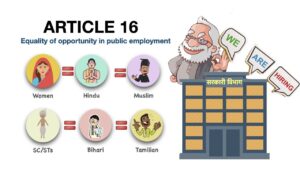
पर आधारित है।
This principle is rooted in Articles 14 and 16 of the Constitution.
निष्कर्ष | Conclusion
भारत में आरक्षण से जुड़े प्रमुख न्यायिक निर्णय (1950–वर्तमान)
Top 10 Landmark Judgments on Reservation in India
Champakam Dorairajan Case (1951)
चंपकम दोरैराजन बनाम मद्रास राज्य (1951)
यह भारत में आरक्षण से संबंधित पहला प्रमुख मामला था।
सुप्रीम कोर्ट ने कहा कि सामाजिक आधार पर आरक्षण, मौलिक अधिकारों का उल्लंघन करता है।
इस निर्णय के बाद पहला संविधान संशोधन (Article 15(4)) लाया गया, जिससे सामाजिक और शैक्षणिक रूप से पिछड़े वर्गों के लिए आरक्षण को वैधता मिली।
Balaji Case (1963)
एम.आर. बालाजी बनाम मैसूर राज्य (1963)
सुप्रीम कोर्ट ने कहा कि आरक्षण की सीमा अत्यधिक नहीं होनी चाहिए।
कोर्ट ने यह सिद्धांत दिया कि आरक्षण सामान्यतः 50% से अधिक नहीं होना चाहिए,
हालाँकि इसे पूर्ण नियम नहीं कहा गया।
Devadasan Case (1964)
देवदासन बनाम भारत संघ (1964)
इस मामले में Carry Forward Rule को असंवैधानिक घोषित किया गया,
क्योंकि इससे आरक्षण 50% से अधिक हो रहा था।
कोर्ट ने समान अवसर के अधिकार पर ज़ोर दिया।
State of Kerala vs N.M. Thomas (1976)
एन.एम. थॉमस बनाम केरल राज्य (1976)
इस निर्णय में सुप्रीम कोर्ट ने कहा कि समानता का अर्थ समान व्यवहार नहीं, बल्कि समान अवसर है।
यह फैसला सकारात्मक भेदभाव (Affirmative Action) को मजबूत करता है।
Indra Sawhney Case (1992)
इंदिरा साहनी बनाम भारत संघ (1992)
यह आरक्षण से जुड़ा सबसे महत्वपूर्ण निर्णय है।
मुख्य बातें:
Nagaraj Case (2006)
एम. नागराज बनाम भारत संघ (2006)
इस निर्णय में कहा गया कि SC/ST को पदोन्नति में आरक्षण देने से पहले सरकार को यह साबित करना होगा कि:
Jarnail Singh Case (2018)
जर्नैल सिंह बनाम लच्छमी नारायण गुप्ता (2018)
सुप्रीम कोर्ट ने स्पष्ट किया कि SC/ST के लिए पिछड़ेपन का नया डेटा आवश्यक नहीं है।
हालाँकि Creamy Layer सिद्धांत SC/ST पर भी लागू होगा।
EWS Reservation Case (2022)
ईडब्ल्यूएस आरक्षण मामला (जनहित अभ्युदय केस) – 2022
सुप्रीम कोर्ट ने
आर्थिक आधार पर 10% EWS आरक्षण को संवैधानिक रूप से वैध ठहराया।
यह आरक्षण
103वें संविधान संशोधन के तहत लागू किया गया।
Saurav Yadav Case (2021)
सौरव यादव बनाम उत्तर प्रदेश सरकार (2021)
सुप्रीम कोर्ट ने कहा कि Open / General category सभी के लिए खुली है।
यदि कोई आरक्षित वर्ग का उम्मीदवार बिना किसी रियायत के अधिक अंक लाता है, तो उसे Open category में रखा जा सकता है।
Justice Surya Kant: 53rd Chief Justice of India
Justice Surya Kant was appointed as the 53rd Chief Justice of India on 24 November 2025. He succeeded Justice Bhushan Ramkrishna (B. R.) Gavai.
Appointment of the Chief Justice of India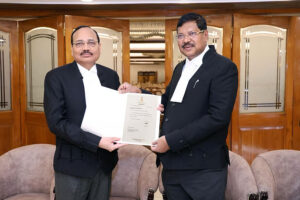
Chief Justice of India: Constitutional Provisions
Appointment
Qualifications
To be appointed as the CJI (or a Supreme Court judge), a person must:
Tenure
Removal
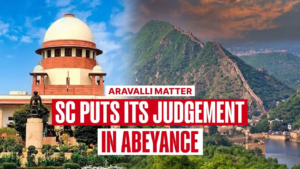
One of India’s oldest mountain systems, the Aravalli Range, has once again come under policy and judicial focus. In a recent order, the Supreme Court of India laid down a uniform scientific definition of the Aravalli hills and imposed a ban on new mining leases and renewals across Delhi, Haryana, Rajasthan, and Gujarat.
This judgment goes beyond mere mining regulation and represents a structural judicial intervention aimed at long-term ecological protection.
Ecological Significance of the Aravalli Range
Mining Pressure
Regulatory and Judicial Action on Mining
Key Recommendations of the Central Empowered Committee (CEC)
The CEC proposed a science-based, multi-layered strategy focusing on both mining regulation and ecological balance:
The Supreme Court accepted all these recommendations in its November 2025 order and directed their implementation.
Aravalli ‘Green Wall’ Project
Need for a Uniform Definition
The Court noted inconsistent criteria used by states and expert bodies to identify the Aravallis. Even definitions by the Forest Survey of India (FSI) varied over time.
FSI Criteria (2010)
Areas qualify as part of the Aravalli Range if:
Joint Committee and Its Findings
A joint committee was formed including representatives from:
Committee Conclusion (October 2025)
Divergent Views
Additional Directions by the Supreme Court
The Court ordered the preparation of a Comprehensive Sustainable Mining Management Plan, which will:
The objective is to regulate mining while preserving ecological integrity.
Why No Complete Ban on Mining?
The Supreme Court clarified that:
Balanced Approach Adopted
Conclusion: Balancing Conservation and Development
This landmark judgment treats the Aravallis not merely as a geological feature but as a national ecological asset. By mandating a uniform definition, scientific mapping, and phased regulation, the Supreme Court has attempted to strike a pragmatic balance between environmental conservation and development.
The long-term success of this framework will depend on effective and sincere implementation by both the Centre and the States.

साइबर अपराधों में 31.2% की तेज वृद्धि दर्ज हुई।
Cybercrimes recorded a steep rise of 31.2%.